Why the Biggest AC Isn't the Best AC for Your Houston Home
An air conditioner that's too big for your house can leave rooms cold and the air clammy at the same time. Here's why size matters more than horsepower.
August 26, 2026 · 3 min read
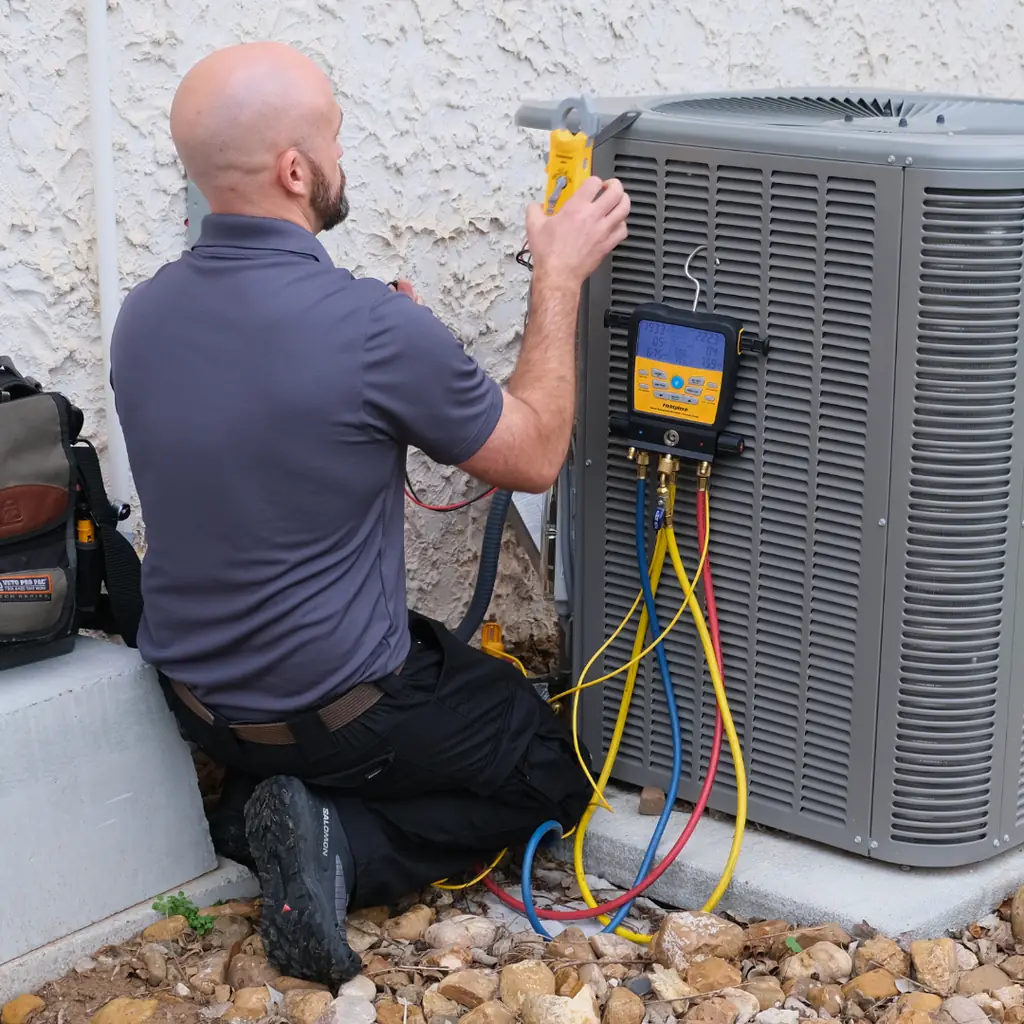
When a homeowner is staring down the cost of a new AC system, the instinct is usually to round up. If the old unit struggled on the worst August afternoons, why not get something bigger this time? It feels like the safe choice. In practice it's often the reason a brand new system still leaves a house feeling clammy.
Short cycling is the real problem
An oversized air conditioner cools the air in a room fast. That sounds like a good thing until you understand what a compressor actually needs to do to control humidity. Cooling the air is only half the job. The other half is running long enough for that cold air moving across the evaporator coil to pull moisture out of it. An oversized unit hits the thermostat's target temperature so quickly that it shuts off before that moisture removal really gets going. The room reads cool on the thermostat and still feels damp on your skin.
That start-stop pattern has a name in the trade: short cycling. It isn't just a comfort problem. Every start puts a jolt of electrical and mechanical stress on the compressor, the part of the system that's the most expensive to replace. A unit that's sized correctly runs longer, gentler cycles. One that's oversized turns on and off far more often than it should, and that adds up to more wear over the life of the equipment, not less.
Sizing isn't a square footage guess
A lot of quick estimates in this industry still boil down to a rule of thumb based on square footage. That shortcut ignores almost everything that actually determines how much cooling a house needs. Two homes of the same size in Tomball can have completely different loads depending on how much of the wall area is glass, which direction the biggest windows face, how much attic insulation is up there, how tight the ductwork is, and how many people and appliances are adding heat inside on a given day.
A proper load calculation accounts for all of that instead of skipping straight to a tonnage number. It's the difference between sizing a system for the house you actually have and sizing it for a generic house that happens to share the same floor plan on paper. Optimal Air Solutions builds its residential AC installations around this kind of airflow engineering and correct sizing rather than a shortcut, which is also why installation includes real thought about SEER tier and equipment selection alongside the tonnage decision.
What better equipment adds to correct sizing
Getting the size right solves most of the short cycling problem on its own. Modern variable speed equipment goes a step further. Trane's TruComfort variable speed technology doesn't just run at one output level, it adjusts in increments as small as one tenth of one percent and holds the house within half a degree of whatever the thermostat is set to. Instead of blasting full output and shutting off, it ramps to whatever level actually matches the heat coming into the house at that moment, which means longer, lower, steadier run times. That's exactly the kind of extended airflow across the coil that pulls humidity out of a Houston home properly instead of just cooling the air and calling it done.
None of this means every AC that's struggling needs to be replaced. Optimal Air Solutions' stated position is to repair first and keep an existing system running as long as that's genuinely the more sensible choice for the homeowner, and only have the sizing and replacement conversation once repair has actually stopped making sense. When that conversation does happen, a technician should walk through the load calculation with you, not just hand you a number.
What to ask before you sign anything
- Ask whether the quote is based on a room by room load calculation or a square footage estimate
- Ask what factors were used, such as insulation, window area, and duct condition
- Ask how the proposed tonnage compares to what's currently installed, and why
A technician who's done this properly will have real answers, not just a bigger number and a bigger price tag. Optimal Air Solutions has been doing residential and commercial HVAC work in the Houston area for over 30 years, with NATE-certified technicians and a Trane Comfort Specialist credential the company has held for more than a decade. Reach the team at (832) 779-1008 to talk through what correct sizing looks like for your house before you replace anything.
Optimal Air Solutions — (832) 779-1008
Call (832) 779-1008More articles
What SEER Actually Buys You When You're Comparing AC Systems
The SEER rating on a new system is more than a sticker number. Here's what it measures and how to weigh it against what each tier actually costs.
The Furnace Check That Saves Houston Homeowners From a Bad First Cold Night
A furnace that hasn't run since last winter is exactly the kind of equipment that fails on the coldest night of the year. Here's what a real pre winter check covers.