The Furnace Check That Saves Houston Homeowners From a Bad First Cold Night
A furnace that hasn't run since last winter is exactly the kind of equipment that fails on the coldest night of the year. Here's what a real pre winter check covers.
August 26, 2026 · 4 min read
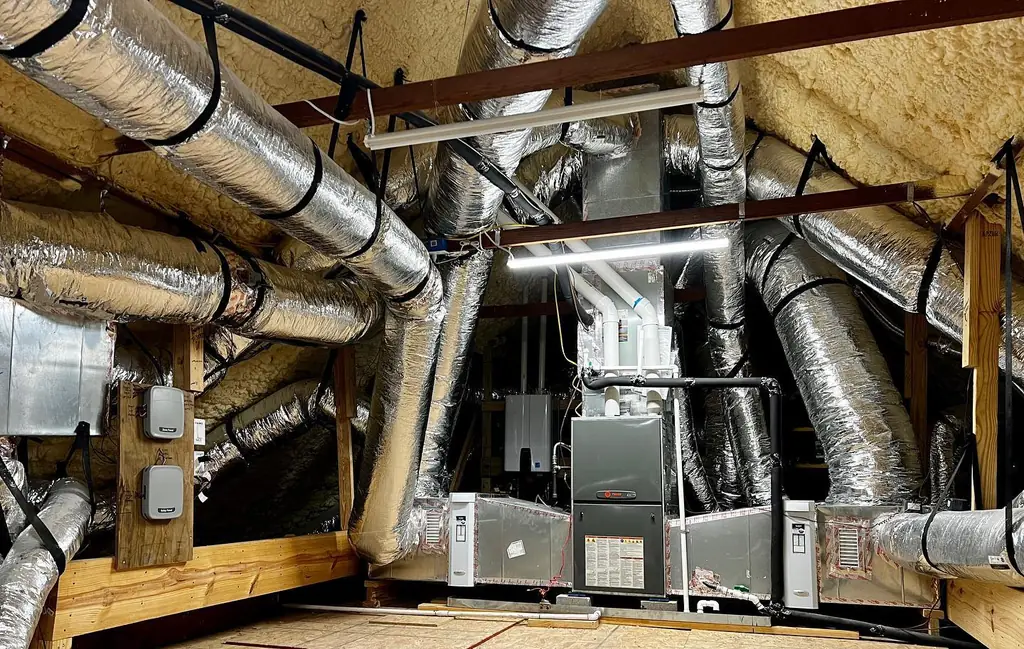
Houston doesn't ask much of a furnace for most of the year. It sits in the attic from spring through fall, doing nothing, while the AC does all the work. Then a cold front rolls in fast, the kind Texans call a Blue Norther, temperatures drop hard in a matter of hours, and that furnace is expected to fire up flawlessly on the very first try. That's a lot to ask of equipment that's been idle for months.
Why idle time is the actual risk
A furnace that sits unused doesn't age gracefully. Dust settles into components that need to move freely. Small mechanical parts that haven't cycled in months can seize or stick. None of that shows up as an obvious problem while the system is off, it only reveals itself the moment you actually need heat, which in Houston tends to be suddenly and without much warning once a front comes through. Checking a furnace before that first cold night, rather than after it fails, is the entire logic behind a pre winter inspection.
The four things a real check covers
A proper furnace maintenance visit isn't a quick glance and a filter swap. It follows a specific process: burner assembly cleaning, heat exchanger inspection, safety control testing, and airflow optimization. Each of those catches a different failure mode, and skipping any one of them leaves a real gap.
- Burner assembly cleaning clears the buildup that accumulates over months of sitting idle, which affects how cleanly and evenly the furnace ignites
- Heat exchanger inspection looks specifically for cracks, which matter because a cracked heat exchanger can pose a carbon monoxide risk and often shows up first as inconsistent heating around the house
- Safety control testing confirms the switches and sensors that are supposed to shut the system down if something goes wrong are actually working
- Airflow optimization checks that air is moving through the ductwork the way it's supposed to, since restricted airflow makes a furnace work harder than it needs to
The heat exchanger is worth understanding on its own
Of the four, the heat exchanger inspection is the one most homeowners have never heard of but should care about most. It's the metal component that separates the flame and combustion gases from the air that actually circulates through your house. When it cracks, combustion byproducts can end up mixing with the air your furnace is blowing into your living room, which is exactly why a proper inspection treats it as a safety check, not just a performance check. It's also a component that tends to fail quietly, sometimes only showing up as heating that feels uneven from room to room, well before anything sounds or smells wrong.
When it's a repair and when it's time to talk replacement
Not every furnace issue found in a fall check means a new unit. Optimal Air Solutions' approach across its heating work is to repair first and keep the existing furnace running as long as that's genuinely the sound decision, and to only shift the conversation to replacement once repair has actually stopped being the economical answer. A few signals tend to point that direction on their own: a furnace older than 15 years, one that's needed frequent service calls, or a noticeable spike in heating bills without an obvious cause. None of those alone is a verdict, but together they're worth raising with a technician during the same visit.
If replacement does end up being the right call, Optimal Air Solutions installs Trane furnaces rated at 90% or higher AFUE, and services furnaces of every make and model regardless of what's already installed in the house. Either way, the point of doing this before winter rather than during the first hard freeze is simple: a furnace with a problem is far easier to deal with on a Tuesday afternoon in October than at ten o'clock on the coldest night of the year.
Why the timing of a Blue Norther makes this worse than a slow cold snap
Winter in Houston rarely arrives gradually. A Blue Norther can drop the temperature by twenty or thirty degrees in a few hours, often overnight, which means a household usually finds out its furnace has a problem at the worst possible moment: after dark, on the first genuinely cold night, with the temperature still falling outside. That's a very different situation from a slow seasonal cooldown where a sluggish furnace has time to be noticed and dealt with before it actually matters. Getting ahead of that with an inspection while the weather is still mild removes the surprise entirely.
It doesn't need to wait for a scheduled appointment months out
Optimal Air Solutions is open seven days a week, Monday through Friday from 7:00 AM to 10:00 PM and Saturday and Sunday from 7:00 AM to 7:00 PM, with emergency repair coverage available 24 hours a day, seven days a week on top of that. A pre winter furnace check doesn't need to compete for a slot months in advance, and if a furnace does fail unexpectedly once the weather turns, emergency coverage is there for exactly that situation. NATE-certified technicians run the same four-part process whether it's a scheduled fall inspection or an emergency call in the middle of a cold snap, so the quality of the check doesn't depend on how much notice there was.
Schedule a pre winter check at (832) 779-1008 while the weather is still mild enough that a problem found today is simply an appointment, not an emergency.
Optimal Air Solutions — (832) 779-1008
Call (832) 779-1008More articles
Why the Biggest AC Isn't the Best AC for Your Houston Home
An air conditioner that's too big for your house can leave rooms cold and the air clammy at the same time. Here's why size matters more than horsepower.
What SEER Actually Buys You When You're Comparing AC Systems
The SEER rating on a new system is more than a sticker number. Here's what it measures and how to weigh it against what each tier actually costs.